
The Elements of Bio-mining is a large government-funded program that
includes projects from the University of British Columbia, the University of
Toronto and of course, Laurentian University. The aim? Harness the
capabilities of microbial communities to stabilise mine waste and turn this
waste into valuable metals such as nickel, copper, and zinc. These guys can
handle extreme conditions and thrive at mining sites, including the nickel mines
here in Sudbury. To learn more, go to http://www.biomining.ca.
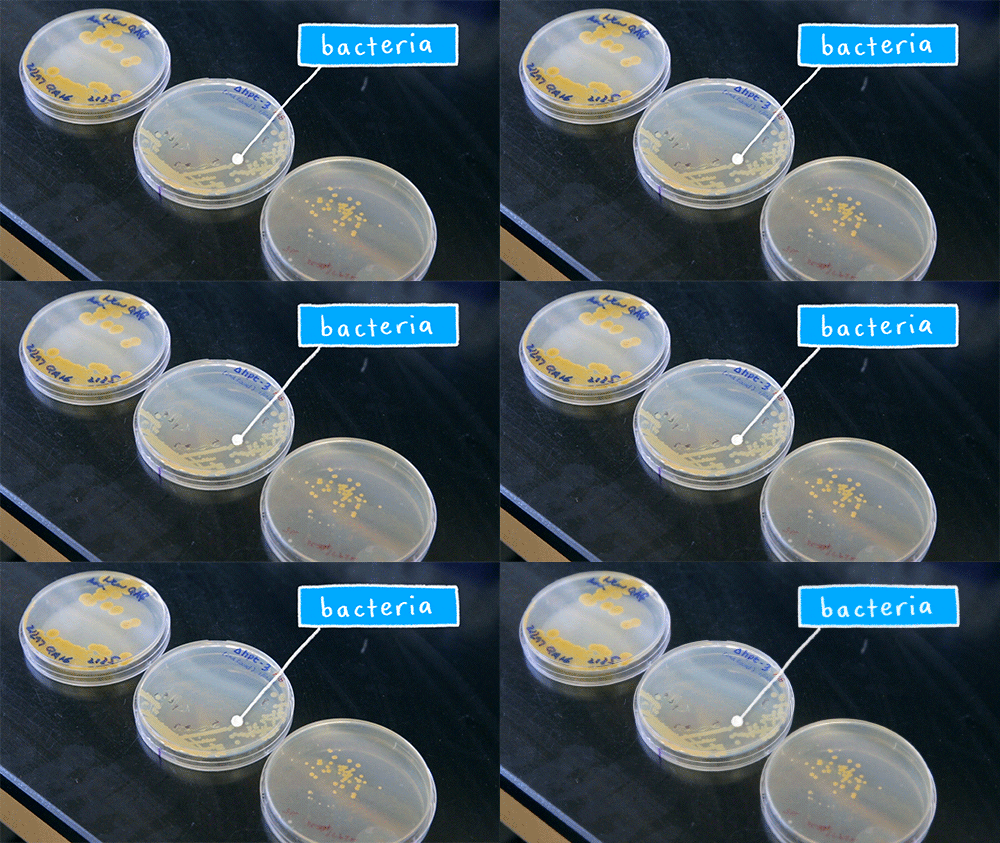
- WARNING: SCIENCE
AHEAD -
Extracting
metals from sulfide minerals creates sulfide-laden waste tailings, which
develops the risk of acid mine drainage (AMD).
“Hey
Shahana, what is AMD?”.
GREAT
QUESTION MY FRIEND.
It’s
basically when oxidation causes iron sulfide within these tailings to
ultimately convert into sulfuric acid that can outflow and create acidic water.
This drainage eventually leads to ecological destruction and contamination (as
you can imagine). Methods to prevent oxidation and slow down AMD has included
engineered covers or disposal under water.
HOWEVER
- There are ways to take these oxidising processes and make them beneficial,
i.e. using bacteria to extract metals from ore or mine waste - also known as, bioleaching.
In
this process, you also remove the iron and sulphur and make them less likely to
produce AMD in the long run. Dr.
Mykytczuk’s research involves in-situ bio-treatments and exploring strategies for
low concentration metal extraction. However, because of Canada’s colder
climate, these waste heaps have a hard time maintaining temperatures high
enough for mesophilic or thermophilic microbial growth. So Dr. Mykytczuk’s research is looking at how to
optimise cold-adapted microbial communities and identifying alternate
bioleaching pathways. This is a great long-term, cost-effective (and most importantly in my eyes,
ECO-FRIENDLY) solution, especially since there are ~5000 mine sites in Ontario
alone.

In
the end, this research is extremely important since there are few examples of
bioleaching technologies that work in Canada. Hopefully, these technologies can
be developed in Sudbury and made available for other sites! To learn more about
Dr. Mykytczuk’s research, go to http://www3.laurentian.ca/livingwithlakes/about/staff/nadia-mykytczuk//.
The first task Torben and I had was
creating individual cards that summarised the elements of each of the three
projects. For us, these cards were a great learning opportunity. Obviously, we
got to dip our toes into the realm of graphic design to create images, icons,
and colour schemes that helped us communicate the specific science of each
project. We also applied what we learned about understanding our audience to
select the appropriate vocabulary and concepts that would be best understood by
the reader. Here is the card we created regarding Dr. Mykytczuk’s project about Passive Bioleaching (inspired
by the graphic work of SCOM alumnus Hiba Farran):

- Shahana Gaur
Shoutout www.giphy.com

Hi Dear,
ReplyDeleteI like Your Blog Very Much..I see Daily Your Blog ,is A Very Useful For me.
HRMAX is the industry's leading online employee, staff scheduling software, staff communication reducing the time it takes managers to create, communicate, and human resources
Visit Here - Online Employee, Staff Scheduling | Human Resources Management/